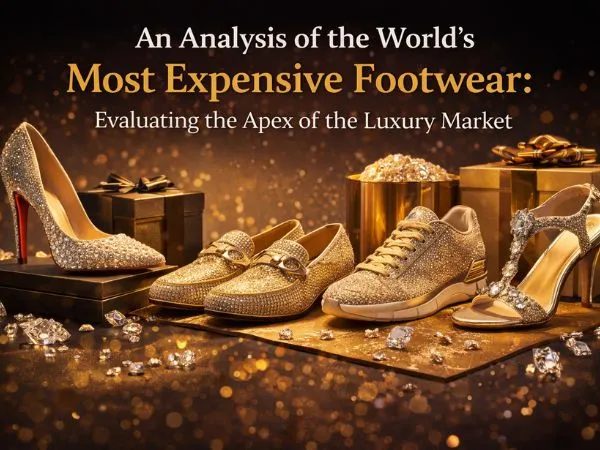
The contemporary footwear market exhibits a profound dichotomy, ranging from utilitarian consumer goods to ultra-luxury collectibles that command astronomical valuations. While standard consumer purchasing decisions involve pragmatic considerations of cost, durability, and utility, the upper echelon of this market operates on entirely different economic principles. This premier sector is characterized by exclusivity, historical provenance, and the integration of highly precious materials, elevating functional apparel to the status of speculative assets and fine art.
Market Dynamics and Artificial Scarcity
The standard retail footwear sector is frequently characterized by the strategic implementation of artificial scarcity, particularly within the athletic and lifestyle segments. Manufacturers deliberately release limited quantities of highly anticipated models, resulting in rapid inventory depletion and the subsequent proliferation of a lucrative secondary market. This phenomenon frequently prices average consumers out of the market, as automated purchasing algorithms and professional resellers inflate retail values exponentially. Consequently, acquiring premium footwear has transitioned from a straightforward retail transaction into a highly competitive and often inaccessible endeavor.
The Phenomenon of Ultra-Luxury Collectibles
Beyond the secondary retail market lies the domain of ultra-luxury collectibles, where footwear transcends its fundamental utilitarian purpose to become a static display of extreme wealth. In this tier, items are frequently acquired by high-net-worth individuals and stored in highly secure, climate-controlled environments, rarely utilized for their intended purpose. The valuation of these items often reflects broader socioeconomic disparities, wherein the capital allocated to a single pair of shoes is comparable to significant real estate acquisitions or philanthropic endowments. Such acquisitions highlight a paradigm where symbolic value and exclusivity entirely supersede functionality.
Methodology for Evaluating Peak Valuations
To comprehend the absolute apex of this market, an examination of the most expensive shoes on earth in rupees provides essential context. The following compilation details the ten highest-valued footwear items globally. This analysis illustrates a broad spectrum of valuation drivers, spanning from the historical significance of athletic memorabilia to bespoke haute couture creations incorporating exceptionally rare geological and extraterrestrial materials.
10. Michael Jordan’s 1985 Air Jordan 1s
Estimated Valuation: 4.6 Crore Rupees
The valuation of athletic footwear is frequently tied to its historical provenance. This specific pair of sneakers was worn by the legendary basketball player Michael Jordan during an exhibition game in Italy in 1985. The shoes bear visible signs of use, including scuff marks and a fragment of glass embedded in the sole from a shattered backboard. Furthermore, they feature mismatched sizing (size 13 and 13.5) to accommodate the athlete’s specific physical requirements. Their multi-crore valuation at auction reflects their status as a paramount artifact of sports history rather than their material composition.
also read : – What Upstream and Downstream Marketing? Let’s Get Understand
9. Kanye West’s Nike Air Yeezy 1 Prototypes
Estimated Valuation: 15 Crore Rupees
Demonstrating the substantial economic impact of celebrity endorsement and cultural influence, these prototype sneakers were worn by the musician Kanye West during a performance at the 2008 Grammy Awards. As the inaugural public presentation of the Yeezy brand line, they hold significant cultural capital within the sneaker collecting community. Their acquisition at a private sale for 15 crore rupees underscores the premium that collectors place on the intersection of music, fashion, and extreme exclusivity.
8. Solid Gold OVO x Air Jordan 10
Estimated Valuation: 16 Crore Rupees
Commissioned by the prominent musician Drake and executed by artist Matthew Senna, this conceptual piece represents a departure from traditional footwear. The item is entirely coated in solid 24-karat gold, resulting in an estimated weight of approximately one hundred pounds. Consequently, these shoes are structurally unwearable and function exclusively as a sculptural representation of opulence. They serve as a prominent example of wealth signaling, wherein the intrinsic value of the precious metal dictates the item’s overall worth.
7. Stuart Weitzman Cinderella Slippers
Estimated Valuation: 16.5 Crore Rupees
Transitioning into the realm of haute couture, the Stuart Weitzman Cinderella Slippers integrate high-end jewelry design with luxury footwear. Constructed from premium Italian leather, the design is augmented by the inclusion of 565 Kwiat diamonds. Worn prominently during an Academy Awards ceremony, the valuation of these heels is derived almost entirely from the clarity, cut, and sheer volume of the precious gemstones utilized in their construction.
6. Stuart Weitzman Rita Hayworth Heels
Estimated Valuation: 25 Crore Rupees
This creation distinguishes itself through the incorporation of historical Hollywood artifacts. The designer integrated a pair of vintage earrings formerly owned by the iconic actress Rita Hayworth directly into the structural design of the heels. Currently owned by a member of a royal family, the valuation of these shoes is largely predicated on the provenance of the jewelry, demonstrating the luxury market’s strong affinity for items possessing a verifiable connection to mid-century cinema history.
5. Harry Winston Ruby Slippers
Estimated Valuation: 25 Crore Rupees
Crafted to commemorate the fiftieth anniversary of the cinematic classic The Wizard of Oz, these slippers were meticulously constructed by the House of Harry Winston. The design process required two months of intensive labor to securely affix 4,600 individual rubies, supplemented by an additional 50 carats of diamonds. The resultant valuation reflects both the extraordinary material costs of the gemstones and the commemorative cultural significance of the design.
4. A. F. Vandevorst Diamond Boots
Estimated Valuation: 26 Crore Rupees
These ankle boots demonstrate the profound financial implications of extensive artisanal labor combined with precious materials. The exterior is entirely encrusted with 39,000 individual diamonds. It is reported that the application process required an excess of 30,000 hours of specialized manual labor. The 26 crore rupee valuation is therefore a composite of the raw material value of the diamonds and the immense human capital required for their assembly.
3. Debbie Wingham High Heels
Estimated Valuation: 125 Crore Rupees
Representing a significant escalation in market pricing, these bespoke heels were commissioned by a high-net-worth family in the Middle East. Designed by Debbie Wingham, the footwear features exceptionally rare pink and blue diamonds, solid gold hardware, and leather finished with 24-karat gold paint. Valued at 125 crore rupees, this commission exemplifies the extreme lengths to which private consumers will go to acquire entirely unique, highly personalized luxury goods.
2. Passion Diamond Shoes
Estimated Valuation: 140 Crore Rupees
Constructed in Dubai, the Passion Diamond Shoes are fabricated from pure gold and silk, further embellished with hundreds of peripheral diamonds. The centerpiece of the design is a pair of 15-carat flawless diamonds positioned at the toe of each shoe. Currently maintained in a highly secure display pending acquisition, these shoes represent a theoretical maximum for commercially available luxury footwear, targeting an exceptionally narrow demographic of international billionaires.
1. Moon Star Shoes
Estimated Valuation: 165 Crore Rupees
Representing the most expensive shoes in the world in rupees, the Moon Star Shoes were designed by the Italian artisan Antonio Vietri. While they feature 30 carats of diamonds and a solid gold heel modeled after the Burj Khalifa, their primary valuation driver is geological rarity. The heel incorporates a verified fragment of a meteorite that struck the Earth in 1576. This integration of extraterrestrial material pushes the valuation to an unprecedented 165 crore rupees, solidifying their position at the absolute pinnacle of the global luxury market.
also read : – How to Choose a Drama School?
Socioeconomic Implications of Extreme Valuations
The existence of consumer goods valued at 165 crore rupees prompts necessary discourse regarding global wealth concentration. The capital allocated to such items is substantial enough to fund significant civic infrastructure or philanthropic initiatives. Within a macroeconomic context, this sector highlights a specialized economy where aesthetic exclusivity and material rarity supersede any considerations of utilitarian value or broader societal benefit.
Divergent Valuation Paradigms: Memorabilia vs. Haute Couture
An analysis of this index reveals a clear thematic divergence in how footwear achieves extreme valuations. The athletic footwear segment (sneakers) derives its value predominantly from historical provenance, rarity, and the cultural significance of the original wearer—effectively operating as cultural memorabilia. Conversely, the haute couture segment (heels and boots) achieves its valuation almost entirely through the integration of intrinsically valuable materials, such as rare diamonds, pure gold, and meteoric fragments, functioning primarily as wearable jewelry.
Logistical and Security Challenges
The acquisition and ownership of such high-value assets necessitate rigorous, institutional-grade security protocols. Items like the Moon Star Shoes require transport by armed personnel and are strictly exhibited within bullet-resistant, climate-controlled enclosures. Furthermore, the necessity for comprehensive, specialized insurance policies underscores their classification as high-risk alternative investments rather than functional apparel. The logistical framework required simply to possess these items emphasizes the extraordinary nature of the ultra-luxury market.
Frequently Asked Questions (FAQ)
Are the most highly valued shoes functionally wearable?
The majority, such as the Moon Star Shoes, are structurally designed to be worn; however, due to their immense value and the fragility of their components, they are maintained exclusively as secure collectibles. Certain conceptual pieces, like the Solid Gold OVO Jordans, are entirely non-functional.
Who constitutes the primary market for such extreme luxury footwear?
The demographic is exceptionally narrow, comprising ultra-high-net-worth individuals, institutional collectors, international royalty, and prominent figures within the entertainment industry.
What primary factors drive the valuation of vintage athletic footwear?
Valuation in this specific sub-sector is predominantly driven by historical significance, verifiable provenance, the cultural impact of the original athlete, and extreme scarcity.
Are these luxury items typically insured?
Indeed, owners must procure specialized, high-value insurance policies comparable to those utilized for securing fine art, rare antiquities, and extensive jewelry collections.
Is the authenticity of the precious materials rigorously verified?
Yes. The precious stones, metals, and rare materials utilized in these bespoke creations are subject to stringent certification processes by recognized gemological and geological authorities to justify their valuations.
Conclusion
The evolution of footwear from basic protective garments to multi-million-dollar luxury assets illustrates a complex intersection of fashion, history, and profound wealth concentration. While the vast majority of consumers navigate a market defined by practical utility and retail availability, the ultra-luxury sector operates on paradigms of extreme exclusivity and material opulence. These items, though inaccessible to the general public, serve as fascinating indicators of global wealth distribution and the upper limits of luxury market economics.