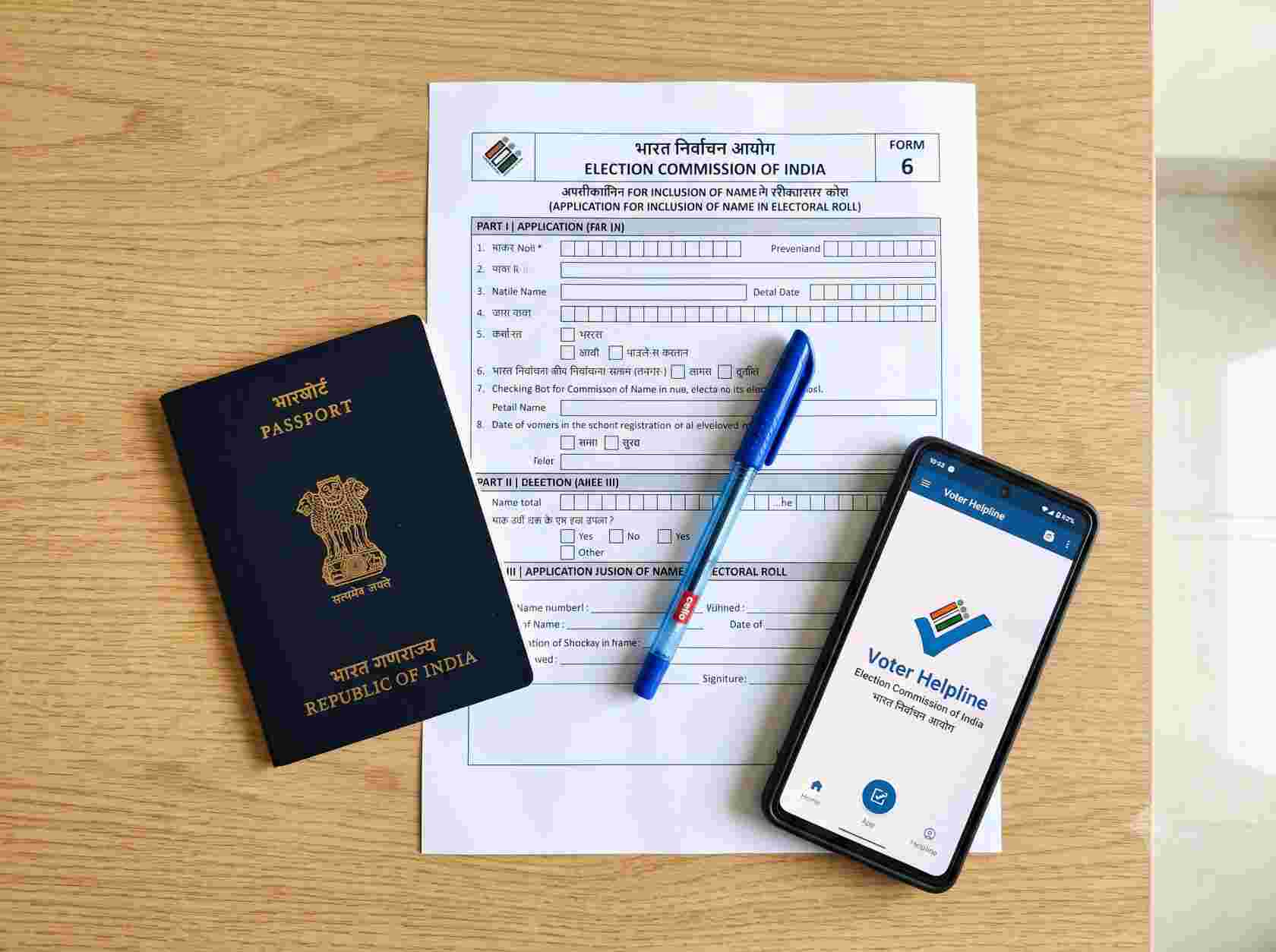
You wake up on election morning. You walk down to your assigned school booth. You stand in the heat for forty minutes. You reach the table, and the poll worker scans the paper roll.
They do not see your name. You get turned away.
That hurts. It makes your blood boil.
You pay local taxes. You drive on broken roads. You want better schools for your kids. Yet, you get zero say. Your neighbors walk out with marked fingers, and you walk home empty-handed. When you skip voter registration, politicians ignore your neighborhood. They only listen to citizens who cast ballots.
I saw this happen to my own family members, and I decided to break down the system. The sign-up process looks messy from the outside. In reality, it only takes ten minutes once you have the facts straight.
Here is my complete, step-by-step playbook to get registered, check your slip, and vote in India.
Who Qualifies to Vote in India?
Before you open any portal, check these three simple criteria:
- Citizenship: You must hold Indian citizenship.
- Age: You must turn 18 years old. The Election Commission of India gives you four qualifying dates each year: January 1, April 1, July 1, and October 1. If you turn 18 before any of these cutoffs, submit your request early.
- Residence: You must reside ordinarily in the constituency where you sign up.
The Four Main Election Forms Explained
The official voter portal uses numbered forms. Picking the wrong form causes instant rejection. Keep this cheat sheet handy:
- Form 6: Use this form if you are a first-time voter living in India.
- Form 6A: Use this form if you are an Indian citizen living overseas.
- Form 7: Use this form to object to a name or remove a deceased voter from the list.
- Form 8: Use this form to shift your address, correct spelling mistakes, or request a fresh replacement voter ID card.
How to Register Online
Registering from your smartphone or laptop is the cleanest method.
- Open voters.eci.gov.in on your browser, or install the Voter Helpline App.
- Click Sign-Up and enter your mobile number. Enter the SMS code sent to your phone.
- Log in to your profile and select Form 6.
- Choose your State, District, and Assembly Constituency. Ask an older family member if you do not know your constituency name.
- Enter your personal details. Type your name in English. The portal fills in your regional language box automatically. Check every letter for typos.
- Enter your family details and contact info.
- Upload a passport photograph with a white background.
- Upload one valid age proof document: birth certificate, PAN card, or passport.
- Upload one address proof document: recent electricity bill, water bill, or bank passbook.
- Accept the declaration and submit the form.
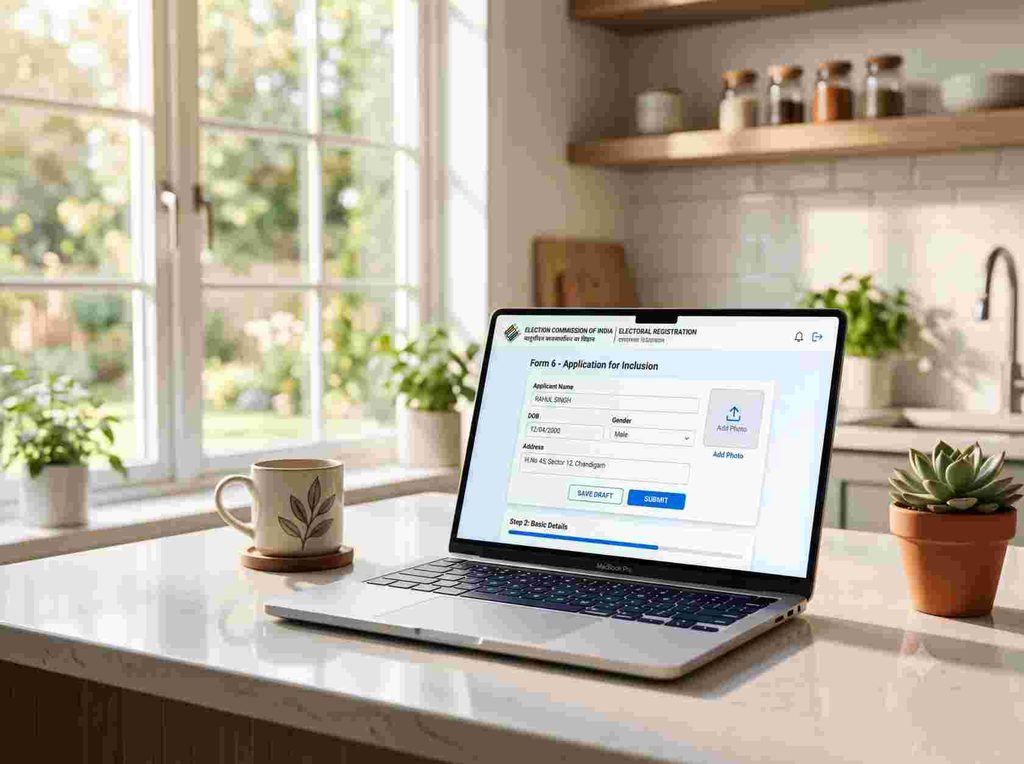
The screen displays a unique Reference ID. Take a screenshot right away.
How to Register Offline
If you prefer physical paperwork or live in an area with spotty internet, complete the steps in person:
- Locate your local Booth Level Officer (BLO) or visit your Electoral Registration Officer (ERO) desk.
- Collect two blank paper copies of Form 6. These forms are free of cost.
- Fill out the sections with a blue pen.
- Attach one passport-size photo to the top box.
- Attach signed paper copies of your identity document and address proof.
- Hand the completed folder to your BLO.
- Ask for an official stamped acknowledgement slip with your tracking number.
Your BLO will drop by your residence within a few weeks to verify that you actually live there.
How to Track and Confirm Your Registration
Submitting your form is step one. You must verify that your name actually lands on the final roll:
- Track your application: Open voters.eci.gov.in, select Track Application Status, pick your state, and enter your Reference ID.
- Search the electoral roll: Open electoralsearch.eci.gov.in. Search using your mobile number, your personal name details, or your EPIC number.
- Call the helpline: Dial 1950 from your phone. Add your local STD code in front of the digits if needed.
- Send an SMS: Send ECI <EPIC Number> to 1950 to receive your booth details.
If your name appears in the online electoral search, you are fully registered.
Inside the Polling Booth: What to Expect on Election Day
Walking into a voting booth can feel confusing if you never did it before. Here is the exact order of events:
- First Polling Official: This officer checks your identity against the master list. Show your voter photo card or an approved government photo ID.
- Second Polling Official: This officer marks your left index finger with purple voting ink, hands you a numbered paper slip, and takes your signature in Form 17A.
- Third Polling Official: This officer takes your paper slip, inspects your inked finger, and clears you to enter the private booth.
- The Ballot Unit (EVM): You step behind the cardboard screen. Press the blue button next to the candidate name and symbol you prefer. The machine sounds an audio beep.
- The VVPAT Verification: Look through the glass window on the printer unit. A paper slip appears showing the candidate number, name, and symbol. It stays visible for 7 seconds, then drops into the locked bin below.
- The NOTA Option: If you dislike all candidates, hit the last button marked NOTA (None of the Above).
Remember to leave smart watches, phones, and cameras outside. Bringing recording devices behind the voting screen is illegal.
The Different Elections in India
Your voter card lets you pick leaders across multiple levels of government:
- Lok Sabha Elections: These are national elections held every five years. Citizens vote for Members of Parliament (MPs) to form the union government and pick the Prime Minister.
- Vidhan Sabha Elections: These are state elections. Voters elect Members of the Legislative Assembly (MLAs) to run state policies and select the Chief Minister.
- Local Body Elections: These contests cover municipal corporations, city councils, and gram panchayats. You vote directly for ward councilors or village pradhans.
- Presidential and Vice-Presidential Elections: Citizens do not cast direct ballots here. Your elected MPs and MLAs form an electoral college to pick the President and Vice-President.
Case Study: A Renter’s Address Mistake
Let me share what happened to my friend Rohit.
Rohit lived in Bengaluru for college, where he registered on the voter list in 2019. In 2022, he moved to Hyderabad for a software job. When elections arrived, he showed up at a Hyderabad booth with his old Bengaluru card.
The poll team checked the register. His name was missing from that booth. They told him he could only vote in his old Bengaluru ward. He missed the vote.
The fix took under fifteen minutes once we sat down together. We opened the portal and filed Form 8 for shifting residence. His name moved to his Hyderabad ward, and his old registration was cleared out.
National records show that India counts over 968 million registered voters. Yet millions fail to update their details after relocating for work. Do not let outdated paperwork silence you.
FAQs
Can I vote if I only hold an identity card like Aadhaar?
No. Your identity card proves who you are, but you cannot cast a ballot unless your name appears on the official electoral roll.
Can I vote from another city without traveling?
No. India does not offer remote or postal voting for general private citizens living in another city. You must transfer your voter registration to your current residence using Form 8.
What should I do if my name has a typo on the card?
Log into the portal and submit Form 8. Upload a document with the correct spelling to update the entry.
Can I vote if I do not have my physical voter card on election day?
Yes. As long as your name is on the electoral roll, you can vote by showing an alternative photo ID such as your passport, driving license, PAN card, or official health insurance smart card.
Wrap Up
Registering to vote in India takes simple documents and a single online form. Check your status on the official portal right now. If your name is missing, file Form 6 today so you are ready when polling day arrives.